NEUROEXPLICIT MODELS OF LANGUAGE, VISION, AND ACTION

We develop novel models that combine neural and human-interpretable  ("explicit") components to accurately solve tasks in natural language processing, computer vision, and action-decision making. These include neurosymbolic models, which combine neural and symbolic elements.

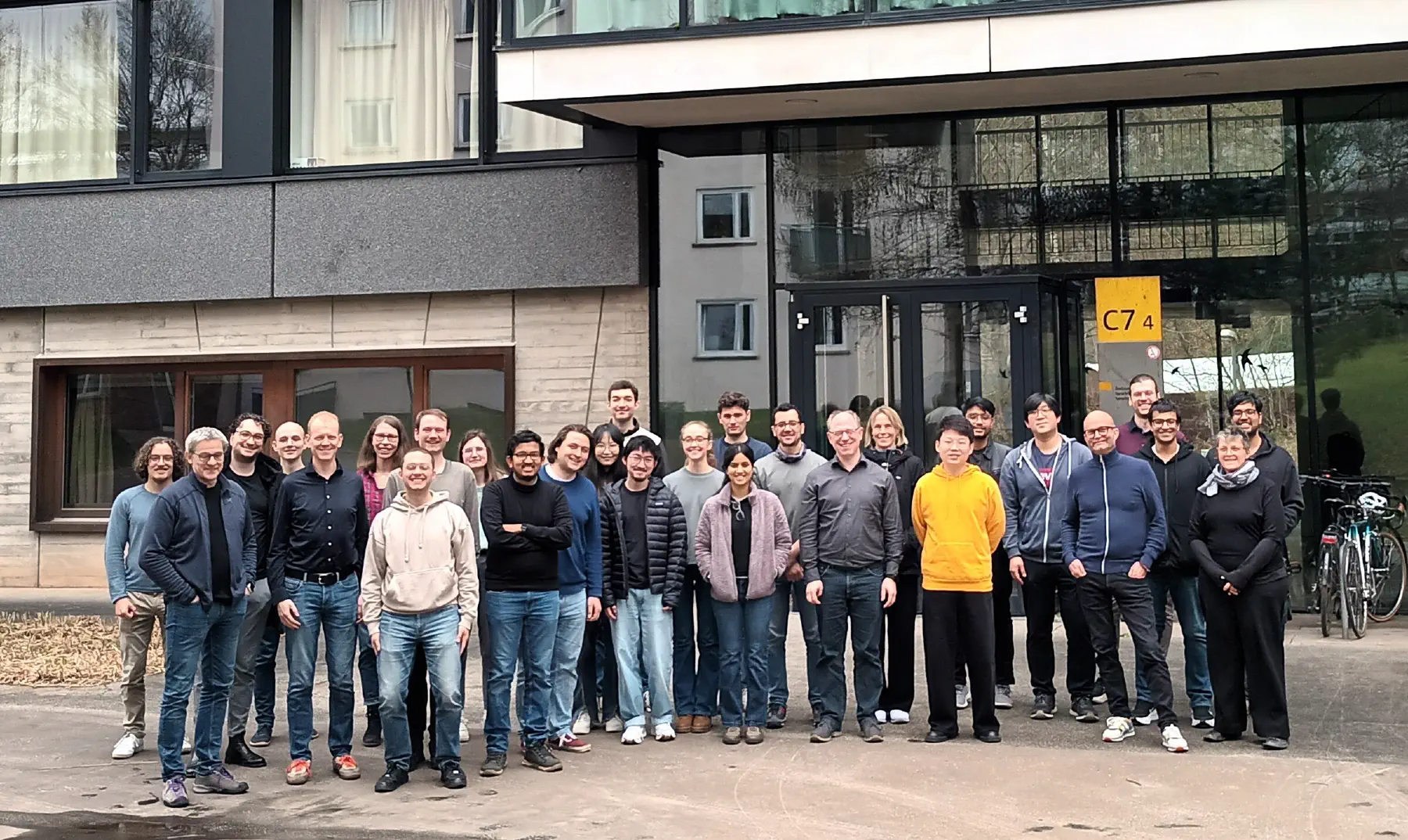
We are a Research Training Group: A team of up to 24 PhD students under the supervision of 13 internationally renowned professors. Each student is funded for four years and will freely choose their research topic within the wide scope of the RTG. Students participate in a qualification program designed to build a tight-knit group that can collaborate across research fields and together explore the deeper principles of effective neuroexplicit models.


About

Participating Institutions

The RTG brings together researchers across five world-class institutions on the same campus in Saarbrücken, Germany: the Departments of Computer Science and of Language Science and Technology at Saarland University; the Max Planck Institute for Informatics; the Max Planck Institute for Software Systems; the CISPA Helmholtz Center for Information Security; and the German Research Center for Artificial Intelligence (DFKI). It is part of the Saarland Informatics Campus.

The RTG is being funded from 2023 to 2028 by the Deutsche Forschungsgemeinschaft (DFG).

News

Introducing: the neuroexplicit models blog

14 November 2025

We are pleased to announce the launch of our new blog on neuroexplicit models!

Learn More 

Open positions for student research assistants

24 October 2025   jobs

We are hiring student research assistants! Join us in January 2026 and be part of a team of 25 PhD students and postdocs working on exciting topics of current research.

Learn More 

RTG Neuroexplicit Models at the German Unity Day celebrations in Saarbrücken

01 October 2025   welcome

As part of the Saarland Informatics Campus, the RTG Neuroexplicit Models will contribute to the German Unity Day celebrations in Saarbrücken with three interactive demos. Visitors are invited to explore our research on explainable and transparent AI and to discuss current challenges with our researchers.

Learn More