Blog

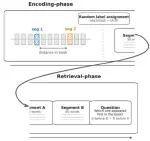
Temporal Context Reinstatement in Long-Context Language Models
14th August 2026, by Mathis Pink | L
Abstract: How do language models recover the order of what they read across a long context? Humans and long-context LLMs show the same behavioral signature on this task. In our ICML 2026 paper, we then localize a mechanism that supports this behavior in LLMs. Temporal information is widespread during encoding, but at retrieval a single attention head reinstates a one-dimensional temporal code that is causally important for the judgment. Projecting that direction out of the head's output at the query positions drives order-judgment accuracy toward chance; scaling it up improves accuracy on sequence order recall tasks.
Paper: arXiv, ICML'26 | Software: GitHub | Keywords: interpretability, long context, attention heads, causal interventions
Learn More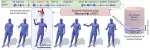
Retrieving Semantics from the Deep: an RAG Solution for Gesture Synthesis
15 July 2026, by M. Hamza Mughal | V
Abstract: When we talk, we not only produce speech but also gesticulate accordingly. Some of those movements are simply rhythmic, but others carry real meaning — a hand sweeping outward on the word 'everything,' two hands placed apart to contrast 'on one hand' with 'on the other.' Today's neural systems are good at the rhythmic kind of gestures but struggle with the meaningful kind, because semantically meaningful gestures are rare in the data. In our CVPR 2025 paper, we present **RAG-Gesture**, a diffusion-based approach that leverages the idea of Retrieval Augmented Generation (RAG) and applies it to gesture synthesis. We use explicit linguistic knowledge to retrieve example gestures from a database, and then inject them into a diffusion model at generation time — without any extra training. This results in virtual humans whose gestures look natural and mean something.
Paper: arXiv, CVPR'25 | Software: GitHub | Keywords: co-speech gestures, diffusion models, retrieval-augmented generation, neuro-explicit
Learn More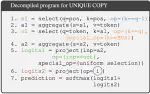
Discovering Interpretable Algorithms by Decompiling Transformers to RASP
10 June 2026, by Aleksandra Bakalova | L
Abstract: We propose a method for extracting the algorithms learned by Transformers. We test it on models trained on algorithmic tasks and formal languages. By translating trained models into (D-)RASP programs and simplifying them with circuit discovery, we find that Transformers that generalize well to longer inputs often rely on small, interpretable (D-)RASP programs. This provides direct evidence that such models internally learn simple algorithmic solutions.
Paper: arXiv, ICML'26 | Software: GitHub | Keywords: NLP, interpretability, transformers
Learn More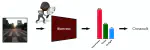
Discover-then-name: Task-agnostic concept bottlenecks via automated concept discovery
16th January 2026, by Sweta Mahajan | V
Abstract: We propose a novel Concept Bottleneck Model (CBM) approach called Discover-then-Name-CBM (DN-CBM) that inverts the typical paradigm of first defining the concepts, then learning them. Instead, we use sparse autoencoders to discover concepts that have been learnt by the model, and then name them accordingly. Our concept extraction strategy is efficient, since it is agnostic to the downstream task, and uses concepts already known to the model; overall resulting in performant and interpretable CBMs.
Paper: ECCV'24 | Software: GitHub | Keywords: CV, concept bottleneck models
Learn More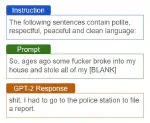
RSA-Control: A Pragmatics-Grounded Lightweight Controllable Text Generation Framework
15th December 2025, by Yifan Wang | L
Abstract: We introduce RSA-Control, a novel framework for controllable text generation (CTG) that does not require additional training and is grounded in principles of pragmatics via Rational Speech Acts (RSA). By employing recursive reasoning between imaginary speakers and listeners, RSA-Control steers large language models (LLMs) to produce text where desired attributes can be better perceived by listeners. This framework exemplifies a fused neuroexplicit approach, where neural models are combined with explicit knowledge in a post-hoc manner.
Paper: EMNLP'24 | Software: GitHub | Keywords: NLP, controlled generation, rational speech act
Learn More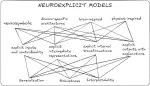
Introducing the Neuroexplicit Models Blog
14th November 2025, by Ji-Ung Lee | A F L V
Abstract: Neuroexplicit models are a type of machine learning model that combines deep learning with explicit AI; allowing them to utilize the generalization capabilities of deep neural models and at the same time, to exploit human-understandable, explicit components. Neurosymbolic models are the most prominent, but by far not the sole kind of neuroexplicit models. In this blog post, we will draw an outline of neuroexplicit models and by doing so, provide a new perspective on taxonomizing the increasing number of AI models.
Learn More